
This year the St Leger is celebrating its 250th anniversary at Doncaster. To put this into perspective on 24 September 1776 when the first British classic was contested the American Declaration of Independence had been signed, George III was on the throne, and the Battles of Trafalgar and Waterloo were 29 and 39 years away respectively.
The first winner of the race didn’t even have a name. On race day she was simply Lord Rockingham’s bay filly. She was later named Allabaculia. The race was run over 2 miles at Cantley Common. The St Leger moved to its current site at Town Moor in 1778
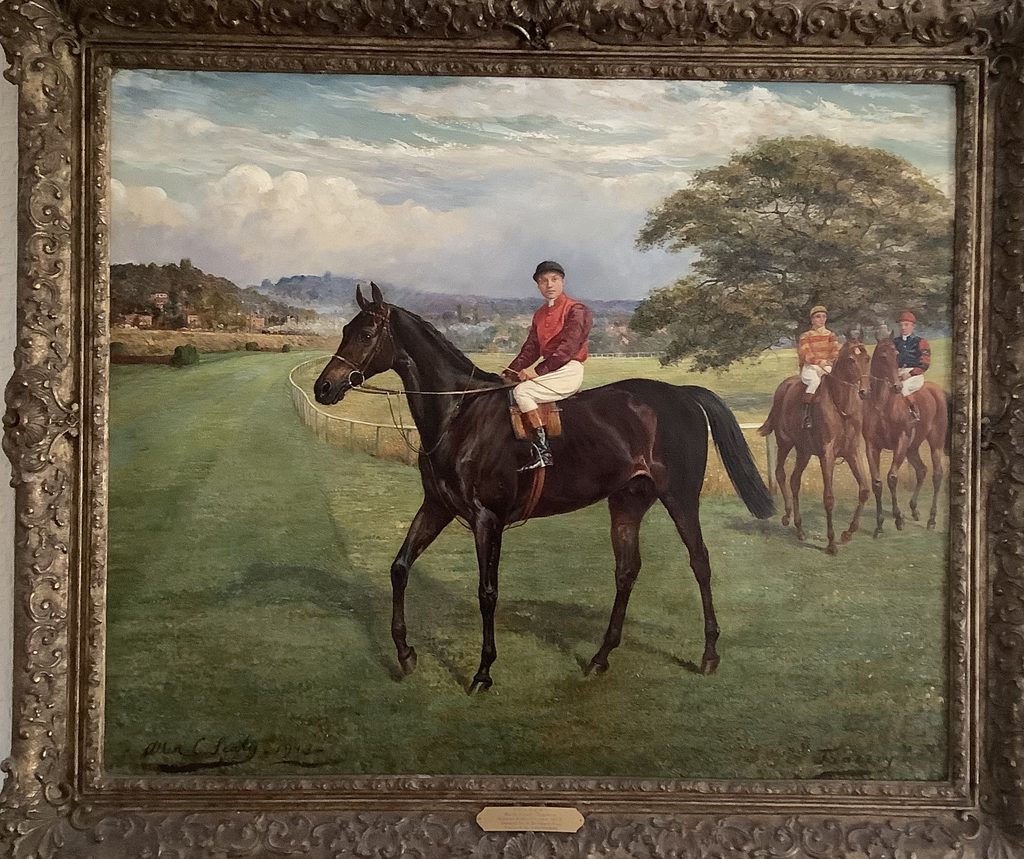
My feature in this blog is Tracery an American bred colt who won the St Leger in 1912 and will forever remain the only horse trained at Palace House stables in Newmarket to win the Doncaster classic. But as you will find out there Is so much more to the Tracery story. A racing career which only lasted seventeen months. A classic winner who hit the headlines from the beginning to the end.
background
Tracery, a son of the 1909 British Triple Crown winner Rock Sand was bred in Kentucky by his owner August Belmont Jr a New York banker. Unable to race in New York in 1910 because racing was banned due to strict new anti gambling legislation, the colt was moved by his owner to Newmarket. Tracery was sent to Palace House stables now home of the National Horse Racing Museum to be trained by John Watson. Watson already a classic winning trainer, having won the 1908 2000 Guineas with Norman III (owned by August Belmont Jr) was the private trainer of the Rothchild’s family at Palace House.
Due to injury the brown colt did not run as a two year old. Tracery began his racing career on 5 June in the Derby at Epsom. An unusual race to have your opening run but up until the 20th century thirteen horses won the Epsom Classic on their first outing. Merry Hampton was the last in 1887.
In more recent times Morston 1973, Commander in Chief 1993 and Ruler Of the World 2013 all won the Derby having not run as a two year old.
the derby
At Epsom Tracery was sent off as a 66/1 outsider in a 20-runner field. The favourite was American bred Sweeper II, the 2000 Guineas winner. Reports indicate that Tracery had been slow to reach maturity and was still backward at the time of his first run. The race was won by the grey filly Tagalie, who at the time became the fifth filly to win the colts’ premier classic. Fifinella in 1916 was the last filly to win the Derby.
Tracery was a strong finishing 3rd six lengths behind Tagalie and a short head in front of King George V’s horse Pintadeau.
Tracery clearly benefitted from his promising run in the Derby winning his next two races, the St James’s Palace Stakes at Royal Ascot and Goodwood’s Sussex Stakes both over a mile. In both races he defeated Sweeper II.
the st leger
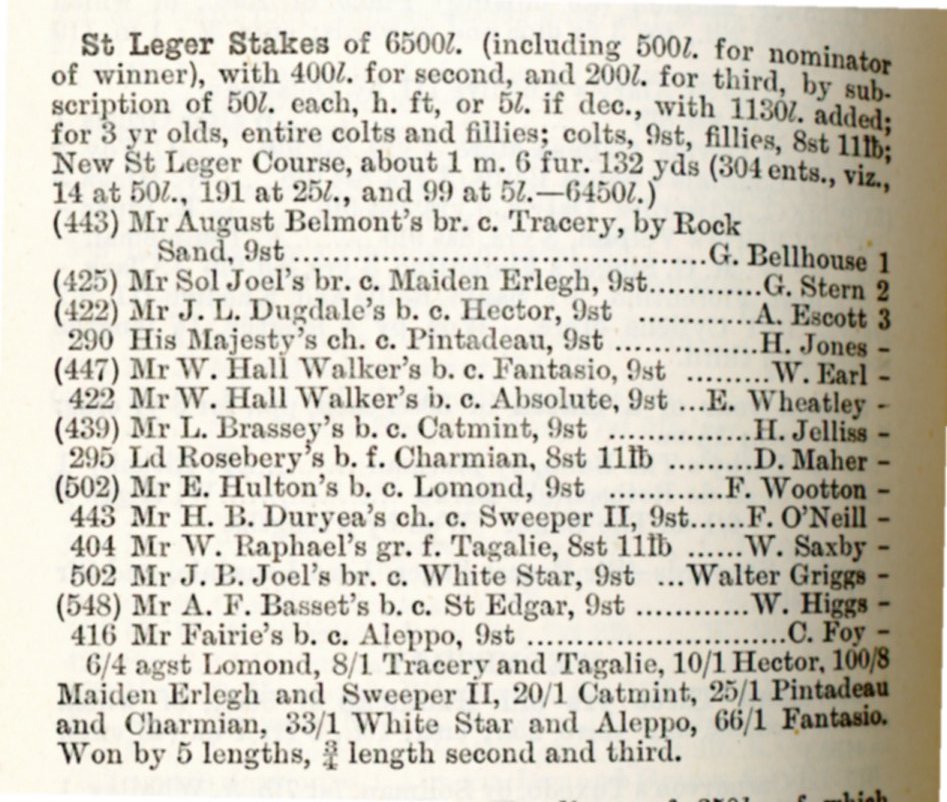
Despite these two performances Tracery was not favourite for the long-distance classic on 11 September 1912. Lomond, the leading two year old of 1911, who had missed the Derby was heavily fancied at 6/4 while Tracery and the star filly Tagalie were both 8/1 joint second favourites.
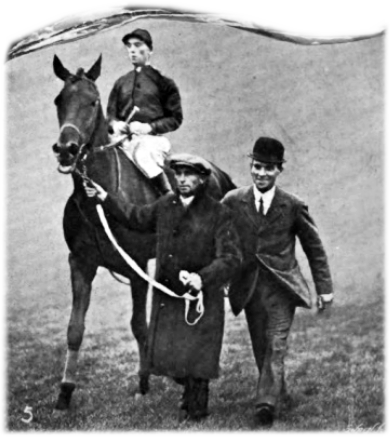
Newspaper reports state that Tracery ridden by George Bellhouse, the French based jockey turned the 1912 St Leger into a procession. Leading from the outset he won the Town Moor classic by 5 lengths. Tagalie and Lomomd finished sixth and seventh
four year old career
Tracery was kept in training as a four year old with the aim of winning the Ascot Gold Cup. In those days it was common for classic winners to do so. In recent years St Leger winners Bayardo (1909) and Prince Palatine (1911) had triumphed in Ascot’s showpiece contest in 1910 and 1912 respectively.
As preparation for the Gold Cup the Palace House trained colt won the Burwell Plate at Newmarket over 1 mile 4 furlongs.
Tracery’s main rival at Ascot was last year’s Gold Cup victor Prince Palatine. Sadly, Tracery and his jockey Albert ‘Snowy’ Whalley were robbed of their chance of glory in dramatic fashion.
SUFFRAGETTE PROTEST AT THE ASCOT GOLD CUP
The suffragette movement which was campaigning for the women’s right to vote in parliamentary elections was at the height of their activities in the 1910s. Less than three weeks earlier on 4 June suffragette supporter Emily Davison had pulled down the King’s horse Anmer in the Derby sustaining injuries which led to her death four days later.
In Ascot – The History by Sean Magee, Tracery’s jockey Whalley is alleged to have said on the eve of the race “I have a feeling that some suffragette is going to be there for the Gold Cup tomorrow”. How right he was.
Newspaper reports state that Tracery was in front with six furlongs to go when a suffragette protester Harold Hewitt stepped on to the course in front of the leading horse with a suffragette flag in one hand and a revolver in the other shouting ‘stop, stop, stop or I’ll shoot’. Hewitt made a grab at Tracery and was struck in the chest by the horse’s head; the horse fell and Whalley was thrown off. The police found a fully loaded six chamber revolver on the turf.
The horse and jockey were not seriously injured. Meanwhile, Hewitt a zoologist from Herefordshire needed surgery for a fractured skull. Dorothy Laird in her book Royal Ascot stated that Hewitt had attended Davison’s funeral only a few days earlier and had intended to commit suicide.
As for the race Prince Palatine had jumped the fallen Hewitt and went on to win the Gold Cup for the second year in a row.
END OF CAREER & OFF TO STUD
Tracery won two more major races the Eclipse Stakes at Sandown and the Champion Stakes at Newmarket. In the former he easily defeated the 1913 2000 Guineas winner Louvois by four lengths.
After retiring Tracery was sent to stud at Baron Leopold de Rothschild’s stud at Leighton Buzzard. He sired the 1919 2000 Guineas winner The Panther, and Papyrus, the 1923 Derby winner before he was sold in 1920 to stand in Argentina for £53,000. Following his son Papyrus’s success in the Epsom classic he was repurchased for £36,000 by a syndicate of British and French breeders to stand at Cobham Stud in Surrey but died of colic soon after his arrival in 1924.
A REVIEW
For a nine-race career of six wins Tracery’s racing life was not short of drama. A first-time out 3rd in the Derby, classic success in the St Leger was sandwiched between the highs and lows of Royal Ascot in 1912 and 1913. Apart from his Derby 3rd and his unfortunate exploits in the Gold Cup his only defeat came when he finished 2nd beaten three lengths, conceding 34lbs to Cantilever in the Jockey Club Stakes over 1 mile 6 furlongs at Newmarket.
Most probably without the intervention of Harold Hewitt, Tracery would have added the Ascot Gold Cup to his St Leger success, a feat achieved by Scandinavia in 2025 and 2026.
Trained at Palace House by John Watson, Tracery was undoubtedly the best horse of his generation. John Randall and Tony Morris in their book A Century of Champions rated Tracery a superior winner of the St Leger.
THE BEST AT PALACE HOUSE?
As we look ahead to the 250th anniversary of Doncaster classic you could make a case that Tracery, the 1912 winner was one of the best horses ever trained at Palace House stables in Newmarket.
Credits
Black and White Photo
Uncredited photographer. – Illustrated sporting & dramatic news. v. 78 (Sept.- Nov. 1912). page 55
Thoroughbred stallion Tracery after the 1912 St. Leger Stakes with George Bellhouse up.’
Colour Photo
Courtesy of John Watson, grandson of Tracery’s trainer. Painting by by Allen Sealy